
Insights, Predictions, and Workforce Strategies for the Year Ahead
Industrial organizations across the U.S. are approaching 2026 with both optimism and caution. Automation is accelerating, AI is reshaping decision-making, and the demand for advanced engineering and technical talent continues to intensify. Leaders in manufacturing, automation, electrical systems, fiber optics, semiconductors, and enterprise network infrastructure are facing a workforce landscape that is more complex, constrained, and competitive than ever before.
This Signature Report presents eight industrial hiring trends that will define 2026. These trends are not speculative—they are already forming beneath the surface. As companies increase investment in digital transformation, expand production capacity, integrate more automation, and adapt to reshoring opportunities, the need for skilled workers grows. At the same time, demographic and technological shifts are reshaping what workers expect and what companies must deliver.
The organizations that thrive in 2026 will be those that understand the forces driving hiring, prepare for talent shortages strategically, and partner with experts who understand their industry at a deep operational level.
This report offers the clarity leaders need to make informed decisions about workforce planning, recruitment strategies, training investments, leadership development, and the future role of AI in hiring.
Industry Outlook for 2026
As 2026 approaches, the industrial hiring landscape is being shaped by three major forces:
- Accelerated Automation & Digital Transformation
Automation is no longer a peripheral investment—it is the backbone of modern manufacturing. Companies upgrading their systems need technicians, controls engineers, automation specialists, and leaders who can operate in a hybrid digital-mechanical environment. - Reshoring, Nearshoring & Domestic Manufacturing Expansion
Federal incentives, global supply chain instability, and competitive pressures are pushing companies to expand U.S. operations. This creates new job clusters—especially in automation, robotics, semiconductors, and advanced manufacturing. - AI Adoption Across the Industrial Value Chain
Artificial Intelligence will fundamentally change how companies recruit, assess candidates, forecast labor needs, and operate facilities. But AI alone cannot solve workforce shortages; it must be paired with human expertise.
These forces converge to create one central truth:
Workforce strategy is now a top-five business priority for industrial organizations.
The trends that follow explain why.
Trend 1: Automation and Robotics Continue to Reshape Required Skill Sets
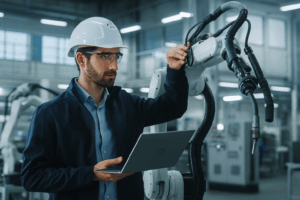
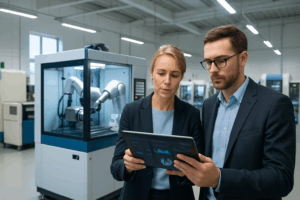
Automation has moved well beyond traditional robotics. In 2026, automation ecosystems include PLCs, motion control, industrial communication networks, smart sensors, machine learning tools, vision systems, and equipment health monitoring. These systems require technicians and engineers who understand electrical, software, networking, and mechanical domains.
For many years, companies could separate these disciplines. Now, the boundaries have blurred. Controls technicians must understand IT networks. Electricians must diagnose PLC-driven faults. Mechanical technicians must collaborate with motion control specialists. The skill landscape is merging at a rapid pace, creating demand for hybrid professionals that the current workforce pipeline cannot supply.
As companies adopt new automation platforms, from cobots to smart conveyors to intelligent picking systems, the need for professionals who can implement, maintain, and optimize these technologies becomes essential. Organizations that cannot secure these skills risk production delays, equipment downtime, higher scrap rates, and stalled modernization efforts.
Key Drivers
- Expansion of robotics and automated handling
- Convergence of IT and OT systems
- Increased use of data analytics and predictive maintenance
- Growing reliance on networked sensors and PLCs
Implications for Industrial Companies
- Traditional maintenance roles no longer meet operational needs
- Engineering teams require cross-disciplinary knowledge
- Production expansions require automation competency from day one
Strategic Recommendations
- Build internal upskilling programs
- Redesign job descriptions to reflect hybrid skill requirements
- Partner with technical schools and automation training providers
Trend 2: AI-Driven Recruiting Becomes a Standard Part of Hiring
Artificial Intelligence is transforming how companies find talent, especially in engineering and operations. In 2026, AI is not a novelty; it is a foundational tool in recruiting pipelines. AI systems can scan thousands of resumes, analyze patterns, highlight skill gaps, and identify candidates who may not appear through traditional searches.
However, AI does not replace human judgment. It enhances it. AI cannot assess culture, leadership potential, communication ability, or technical nuance—elements that matter deeply in industrial hiring. AI also cannot understand the subtle distinctions between different versions of PLC platforms, fiber certification levels, semiconductor process stages, or automation programming skill sets. Those insights require industry experience.
Companies that embrace AI while maintaining seasoned human oversight will hire better, faster, and more accurately. Those that rely exclusively on AI risk misalignment between candidate capability and role requirements.
Key Drivers
- Advances in AI summarization and evaluation
- Higher volume of applicants requiring fast processing
- Pressure to shorten time-to-hire cycles
- Increased use of AI matching tools by job seekers
Implications for Industrial Companies
- Faster screening but greater need for expert verification
- New opportunities to discover transferable skill talent
- Changing expectations from candidates for rapid communication
Strategic Recommendations
- Combine AI screening with expert sector-specific review
- Audit job descriptions using AI for clarity and relevance
- Adopt AI scheduling and communication tools to improve candidate experience
Trend 3: Fiber Optics and Network Infrastructure Talent Remains in Short Supply
Fiber optics plays a foundational role in nearly every modern infrastructure initiative, from 5G networks to smart factories to data centers to industrial communication lines. Yet despite its growing relevance, fiber optics continues to face one of the deepest talent shortages in the technical labor market.
The root causes are structural: limited training programs, high certification barriers, rapid technology evolution, and intense competition from adjacent sectors such as telecom, automation, and cybersecurity. Many fiber professionals develop skills on the job, but the field lacks a steady pipeline of new entrants.
In 2026, the surge in AI-driven data center demand will intensify the shortage. Industrial companies deploying automation, controls, and advanced networking will compete with larger telecommunications and hyperscale organizations for the same limited talent pool.
Key Drivers
- Expansion of enterprise networking and automation
- High demand for 5G and fiber backhaul
- Data center growth driven by AI workloads
- Limited fiber-specialized technical education
Implications for Industrial Companies
- Increased hiring competition and wage tension
- Skill gaps in fiber splicing, testing, and design
- Longer lead times for network infrastructure deployment
Strategic Recommendations
- Establish internal fiber training pathways
- Highlight career growth and certification support
- Work with specialized search partners familiar with fiber roles
Trend 4: Semiconductor Workforce Pressure Intensifies with Domestic Expansion
Semiconductor manufacturing will continue its rapid trajectory into 2026. With CHIPS Act investments accelerating, the U.S. is seeing new fabs, expansions, and equipment upgrades at an unprecedented rate. Semiconductor roles require highly specialized expertise—from cleanroom protocol to process optimization to equipment automation—and the shortage of skilled workers is already being felt across the sector.
Semiconductor companies need process engineers, equipment technicians, yield and reliability specialists, quality engineers, and facility operations leaders. These roles require technical depth and are difficult to fill with general industrial talent. Companies expanding semiconductor operations will face increased relocation challenges, competitive salary pressures, and the need to develop early-career talent pipelines.
Key Drivers
- CHIPS Act funding and new domestic fabs
- High demand for power conversion and management devices
- Shortages of specialized engineering disciplines
- Increased automation in semiconductor production
Implications for Industrial Companies
- Intense wage competition for engineers and technicians
- Talent concentration in limited geographic regions
- Higher pressure to build internal training and mentorship
Strategic Recommendations
- Offer relocation incentives
- Develop university partnerships
- Build multi-year workforce development plans
Trend 5: Reshoring and Nearshoring Expand Technical Workforce Needs
Manufacturers continue to reshoring production due to global instability, cost control, and the need for supply chain resilience. As operations return to the U.S. or expand within North America, companies require new leadership, engineering expertise, and operations talent to establish or scale facilities.
This 2026 industrial hiring trend creates new demand clusters across the Midwest, Southeast, Southwest, and Mexico. Companies with new facilities face intense competition for local talent and often must attract candidates from outside regions.
Key Drivers
- Supply chain risk and geopolitical pressures
- Total cost of ownership analysis favoring domestic production
- Demand for automation-supported reshored facilities
Implications for Industrial Companies
- Need for leadership teams capable of start-up operations
- Higher dependency on technical recruiters
- Talent shortages in specific regions
Strategic Recommendations
- Build recruitment pipelines early—before construction begins
- Offer structured relocation packages
- Invest in leadership onboarding for new sites
Trend 6: Soft Skills Become Critical for Engineering and Operations Leaders
Technical expertise remains essential, but leaders in 2026 must bring something more: the ability to communicate, collaborate, and align teams across engineering, production, quality, and commercial functions. As operations become more automated and cross-functional, leadership expectations have expanded beyond technical depth.
Executives and managers who excel in 2026 will balance operational insight with strategic thinking, motivate diverse teams, guide change, and foster communication between technical and non-technical stakeholders.
Key Drivers
- Greater cross-functional interdependence
- Increased complexity of engineering environments
- Need for leaders who can support modernization initiatives
Implications for Industrial Companies
- Traditional technical interviews no longer predict success
- Need for structured leadership assessment tools
- Higher value placed on communication and adaptability
Strategic Recommendations
- Evaluate leadership styles during interviews
- Prioritize candidates with proven cross-functional collaboration
- Implement leadership development programs
Trend 7: Skilled Trades Face Critical Shortages Due to Retirements
The skilled trades workforce—electricians, mechanical technicians, maintenance specialists, field service technicians—is shrinking. Many professionals in these roles are nearing retirement age, and younger workers are not entering these fields quickly enough to replace them.
In 2026, industrial organizations will feel the consequences: longer downtime, maintenance backlogs, and increased reliance on contractors. Companies must adopt new approaches to training, talent development, and career recruitment to build sustainable pipelines.
Key Drivers
- Aging workforce and rapid retirements
- Limited visibility of trade careers among younger generations
- Competition from higher-paying industries
Implications for Industrial Companies
- Increased downtime risk
- Higher wages for trades professionals
- Difficulty sustaining maintenance reliability
Strategic Recommendations
- Launch apprenticeship programs
- Recruit earlier in high school and technical colleges
- Highlight long-term trade career opportunities
Trend 8: Compensation Competition Intensifies Across Industrial Sectors
As multiple industries compete for similar skill sets—automation, controls, fiber, electrical, semiconductors—compensation expectations continue rising. In 2026, salary compression will push companies to reevaluate pay structures, benefits, incentives, and career development programs.
Companies that fail to adjust compensation strategies risk losing top talent to sectors with more progressive pay models.
Key Drivers
- Cross-industry competition
- Inflation-related wage adjustments
- Growth of specialized technical roles
Implications for Industrial Companies
- Higher turnover risk
- Difficulty attracting experienced candidates
- Increased hiring cycle times
Strategic Recommendations
- Conduct annual compensation benchmarking
- Adjust pay ranges for high-demand roles
- Emphasize total rewards and long-term opportunity
How AI Will Influence Hiring in 2026
AI will shape hiring in three major ways:
1. AI as an Efficiency Engine
AI shortens resume review time, identifies core skills faster, and reduces administrative overhead. It becomes the “first pass,” allowing human recruiters to focus on higher-level evaluation.
2. AI as a Decision Support Tool
AI detects patterns in successful hires, identifies transferable skills, and predicts job performance. It enhances—but does not replace—human insight.
3. AI as a Candidate Experience Enhancer
Candidates expect rapid communication and clear updates. AI-driven chat and scheduling tools meet these expectations.
Industrial companies that blend AI intelligence with industry expertise will outperform competitors in both speed and hiring accuracy.
Strategic Recommendations for Industrial Leaders Entering 2026
To prepare for the eight trends shaping 2026, leadership teams should commit to:
1. Workforce Planning as a Core Business Strategy
Anticipate future needs early and build multi-year plans.
2. Investing in Technical Training and Internal Development
Upskilling reduces dependence on limited external talent pools.
3. Embracing AI Wisely
Use AI for speed and insight while relying on human judgment for accuracy and nuance.
4. Partnering with Specialized Talent Experts
General recruiting methods cannot meet the complexity of industrial hiring.
Industrial hiring in 2026 will be defined by complexity, acceleration, and competition. Companies must prepare for a more technologically advanced, strategically aligned, and talent-driven landscape. Success will belong to organizations that prioritize workforce strategy, invest in talent development, and partner with experts who understand their industry’s unique demands.
Build Your 2026 Workforce Strategy with Harco Group
Harco Group specializes in recruiting engineering, automation, fiber optics, semiconductor, and industrial leadership roles.
If you’re preparing for growth, modernization, or expansion in 2026, contact Harco Group today and partner with a team dedicated to securing the talent that powers your future.